
albums i have loved before

My eldest nephew is at an age where Lego doesn’t work as a gift anymore.
The other day, I asked my brother what to get him for Christmas. A labyrinthine fantasy novel? Silly socks? T-shirt?
He’s into vinyl, my brother reminded me. Any vinyl? Any album? I know he loves Queen, Radiohead, The Beatles. (I agonised one birthday ago about whether to buy him a Michael Jackson record and spent far too long justifying my decision to the poor salesperson, who rather obviously wanted me to pay and go away.)
No, not just any vinyl.
My brother shared a Discogs wish list with me.
At the top were my nephew’s initials and a profile picture that’s a photo of his beloved, now deceased, orange cat (Mr Tickle). The list is extensive: everything from Billie Eilish’s When We Fall Asleep, Where Do We Go? to Massive Attack’s Mezzanine and Sufjan Stevens’s Illinois (a classic).
Luckily, the length and diversity of my nephew’s list means I might actually be able to nab something from a physical store in time for Christmas without having to order a record online.
But it’s also got me thinking about the music I played as someone in my late teens and early 20s, especially when I first learnt to drive and habitually played CDs on repeat to keep myself awake. (In fact, a dear friend – the one who eventually ended up introducing me to my husband! – first wooed me by making personalised mixed CDs for me to play in my beat-up little Daihatsu Charade. Those were the days: drinking takeaway hot chocolates on her garage rooftop and illegally downloading music from Limewire to burn.)
There’s something special, I understand now, at the tender age of 41, about listening to an entire album from start to finish. I’ve grown so impatient – so accustomed to curated, algorithmically funnelled content on streaming platforms – that I rarely engage with music this way. Sometimes, as I’m driving, I’ll say to my phone: ‘Hey, Siri. Play me some sad songs.’ (‘OK,’ she’ll say in reply. ‘I’ll play some songs like that.’) Or I’ll Shazam a catchy tune while I’m waiting in line at a café and add it to my Apple Music library later. Song by song. No continuity, no relationship to anything else. Occasionally, a cluster of songs by one artist from one album. Almost never an entire record.
Listening to an album – every single song, in the order chosen by the artist – feels fundamentally different from listening to a playlist of easy but random favourites. I’m probably the last millennial to notice this phenomenon. But listening to an album, a whole album, means you have to sit with the songs you enjoy a little less. You must experience the overall shape of the album, the way the songs run into one another, the narrative they evoke in a particular sequence, the cadences, the light and shade. It teaches you patience. It slows you down, dulls the impulse to skip and scroll. And it casts and reframes the individual songs in ways you cannot as easily discover when you access them in distracted isolation.
Lately, I’ve been trying to curb my urge to press ‘next’ with my thumb on the steering wheel and just coexist with a song that doesn’t ignite my brain with dopamine in the first two seconds.
Maybe it’s time to return to some albums – discover new ones – and hopefully avoid the humiliation of this year’s Apple Replay, which revealed my most played song for 2025 as… well, this. (There are reasons. It’s nonetheless shameful.)
Some albums I have loved before:
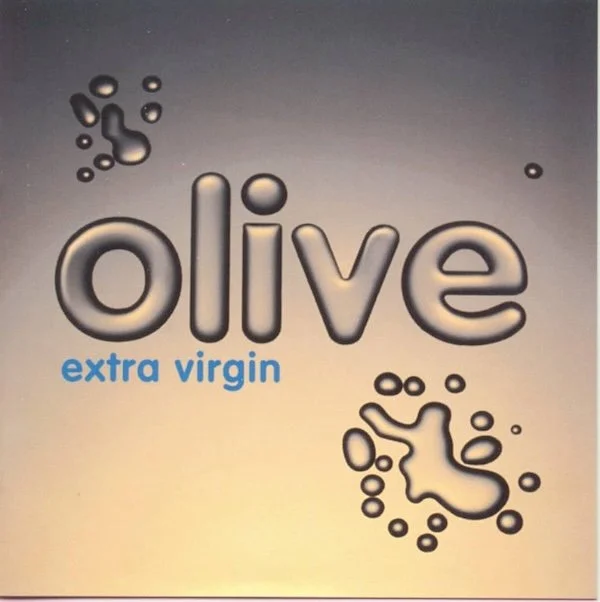
Olive – Extra Virgin
Released in 1996, this CD was part of my older brother’s collection. Olive – a British trip hop band made up of Tim Kellett as producer, instrumentalist, and songwriter; Ruth-Ann Boyle as vocalist; and Robin Taylor-Firth as co-producer and keyboard programmer – shot to fame for their song ‘You’re Not Alone’, which reached number one on the UK singles chart.
I came to the album a few years later, probably because the disc was lying around at home, and it became a fast favourite, though my stand-out tracks still include ‘Killing’, ‘Blood Red Tears’, and ‘You Are Nothing’.
Extra Virgin is a quintessentially ‘90s project (just look at that cover art): synth-y, echoey, and full of pleasingly savage songs to accompany a range of break-up situations.
Ruth-Ann went on to sing lead vocals on the tracks ‘Gravity of Love’ and ‘Silence Must Be Heard’ for Enigma's 2000 studio album, The Screen Behind the Mirror.
Her cover of The Cars’ ‘Who’s Gonna Drive You Home?’ is also airy, dark, and altogether wonderful.

Enya – Watermark
I have a distinct and vidid memory of watching Rage on TV while on Christmas holidays in Australia, sometime in the early ‘90s, and being mesmerised by the music video for Enya’s ‘Orinoco Flow’, which was played alongside ‘She Drives Me Crazy’ by the Fine Young Cannibals before the ad break.
We used to listen to Watermark on CD when Mum was driving, though not when my baby sister was in the car because she used to cry. As I got older, I sometimes imagined I looked a little like Enya on this album cover – at least while my hair was still black. Something about her eyes and the shape of her nose?
I remain openly obsessed with Enya, which I divulged on radio this year (repeatedly, actually, until the hosts made me stop). But what’s not to love? Enya lives in an Irish castle with up to 12 cats at a time. And, according to this Pitchfork article, ‘a generation of artists who grew up on Enya have now arrived to recover the nuances of her artistry and reclaim her as a role model’. Her music is timeless.
Watermark is one of eight of Enya’s studio albums, and in addition to her iconic ‘Orinoco Flow’, it includes sombre yet beautiful tracks such as ‘On Your Shore’ – my second favourite pick.
(It probably still makes my sister cry.)
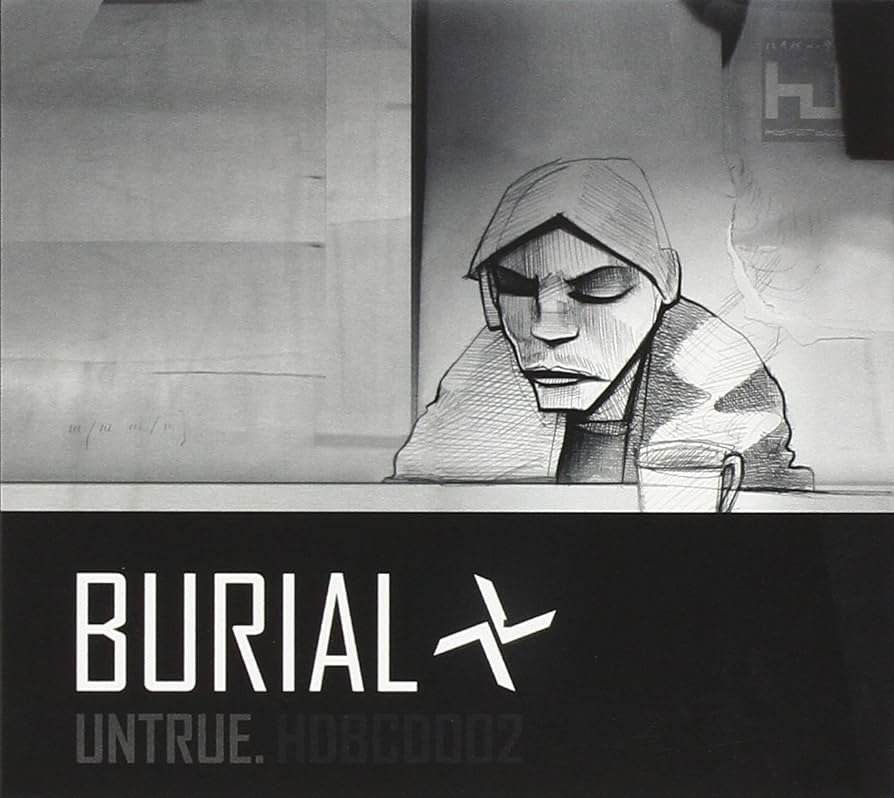
Burial – Untrue
I have a feeling one of my billions of cousins recommended this album to me back in the day. I bought it on Apple iTunes, put it on my iPod Shuffle (omg I’m a hundred years old), and played it relentlessly while travelling around Europe with my dad in 2008.
My father, bless him, has sleep apnoea, and although he dutifully lugged a CPAP machine across Germany, Austria, and the Czech Republic, the whooshing Darth Vader sounds he made at night – just trying to breathe, I guess – used to keep me awake in our cramped (budget) hotel rooms. I actually think it was the beginning of my prolonged struggle with insomnia. To avoid smothering Dad with one of those thin yet somehow heavy hotel pillows, I’d plug my ears tightly with earphones connected to the Shuffle, knock back a Restavit, and hope for the best.
Untrue, I should make clear, is not a bunch of lullabies. ‘Burial’ is the alias of William Emmanuel Bevan, a British electronic musician from South London. Untrue feels something like The Prodigy meets James Blake, ethereal but dank. This album will always be Berlin in autumn to me.
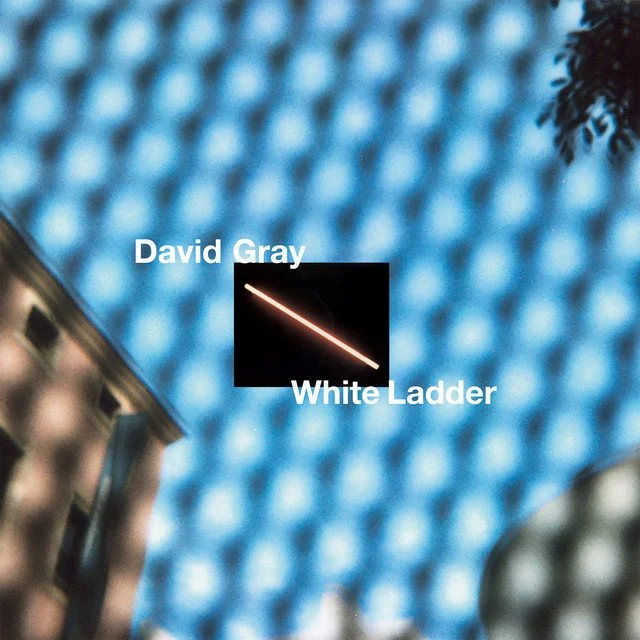
David Gray – White Ladder
The soundtrack of my early 20s, White Ladder was one of many albums I came by simply because my best friend shared my exact taste in music but always made much more effort to discover new artists.
(This state of affairs remains intact almost three decades later.)
David Gray – a Welsh singer-songwriter who rose to prominence in 1998 with this album – played at QPAC only recently, and I had no idea until he’d already moved on from Brisbane. (I’m gutted.)
White Ladder features some of his best known songs: ‘This Year's Love’, ‘Babylon’, ‘Please Forgive Me’, and ‘Sail Away’. But it’s possibly the final track, ‘Say Hello Wave Goodbye’, that’s my actual favourite: an acoustic cover of Soft Cell’s 1981 original.
The strident quality of Gray’s voice, and his unique delivery, sets him apart from other moody guys with guitars. I remember someone asking me once, while listening to ‘This Year’s Love’, ‘What on earth is he saying?’
It does sound very much like this year’s luvaddbeddalllaaaaarse – or something even less Intelligible – but it’s part of the song’s lasting charm.
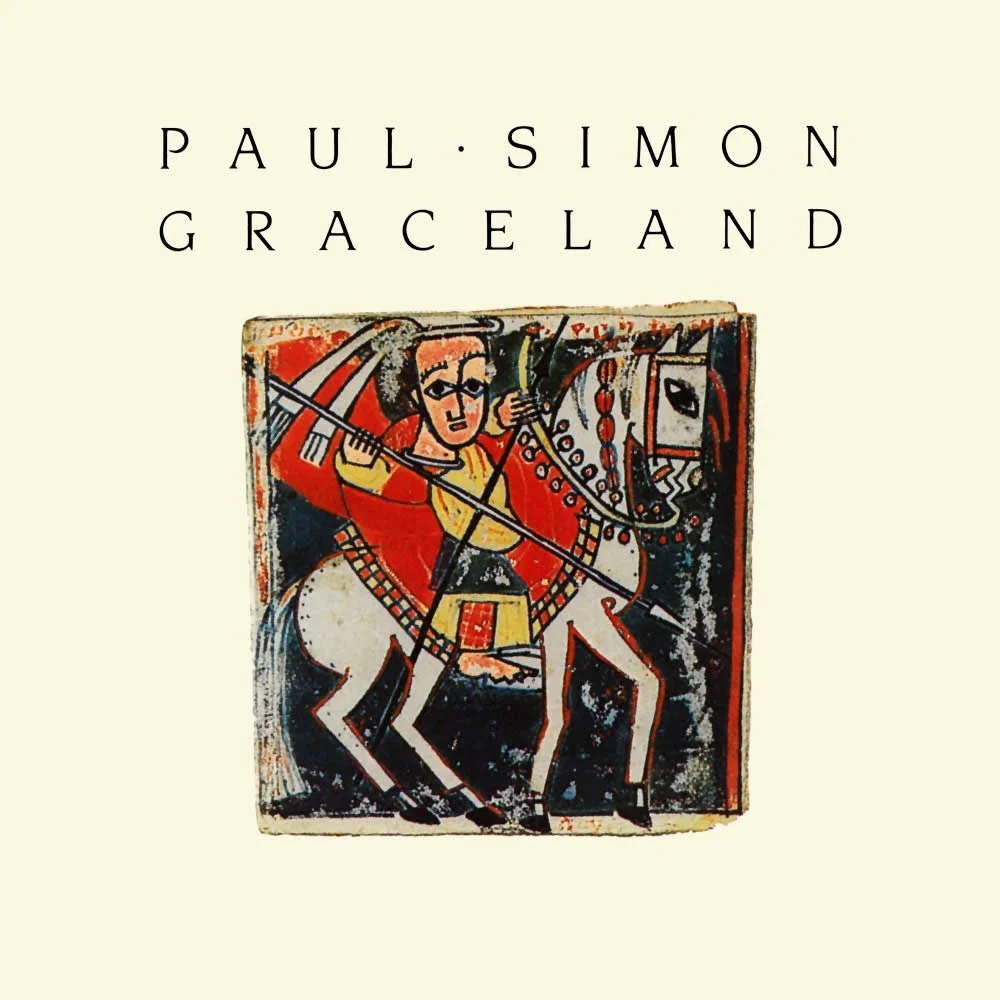
Paul Simon – Graceland
Another CD from my mother’s stash, Graceland holds a special place in my heart. An unusually adventurous Year 5 teacher chose ‘Under African Skies’ for our end-of-year gymnastics performance (circa 1993) at the international school I attended for most of my primary education in Papua New Guinea.
I’m making it sound naff, but just imagine a gaggle of kids from a dozen different countries rolling and cartwheeling and cascading as Paul Simon harmonises with Linda Ronstadt, and you might indulge me this moment of nostalgia.
There’s not a single dud track on this album, which Paul Simon recorded in both Johannesburg and New York, breaking the cultural boycott of South Africa during its policy of apartheid. He’d recently parted ways with Art Garfunkel and split with his wife, Carrie Fisher, experiencing a long and serious bout of depression.
After the failure of his previous album, Graceland catapulted Simon back into the annals of music history, earning him a Grammy in 1987 for Best Album of the Year. Graceland remains controversial for several reasons, including the uncredited influence of Heidi Berg (dick move), but his collaboration with Ladysmith Black Mambazo and an assemblage of other South African musicians helped bring African music into the mainstream – and the album is sometimes still described as one of the best ever made.
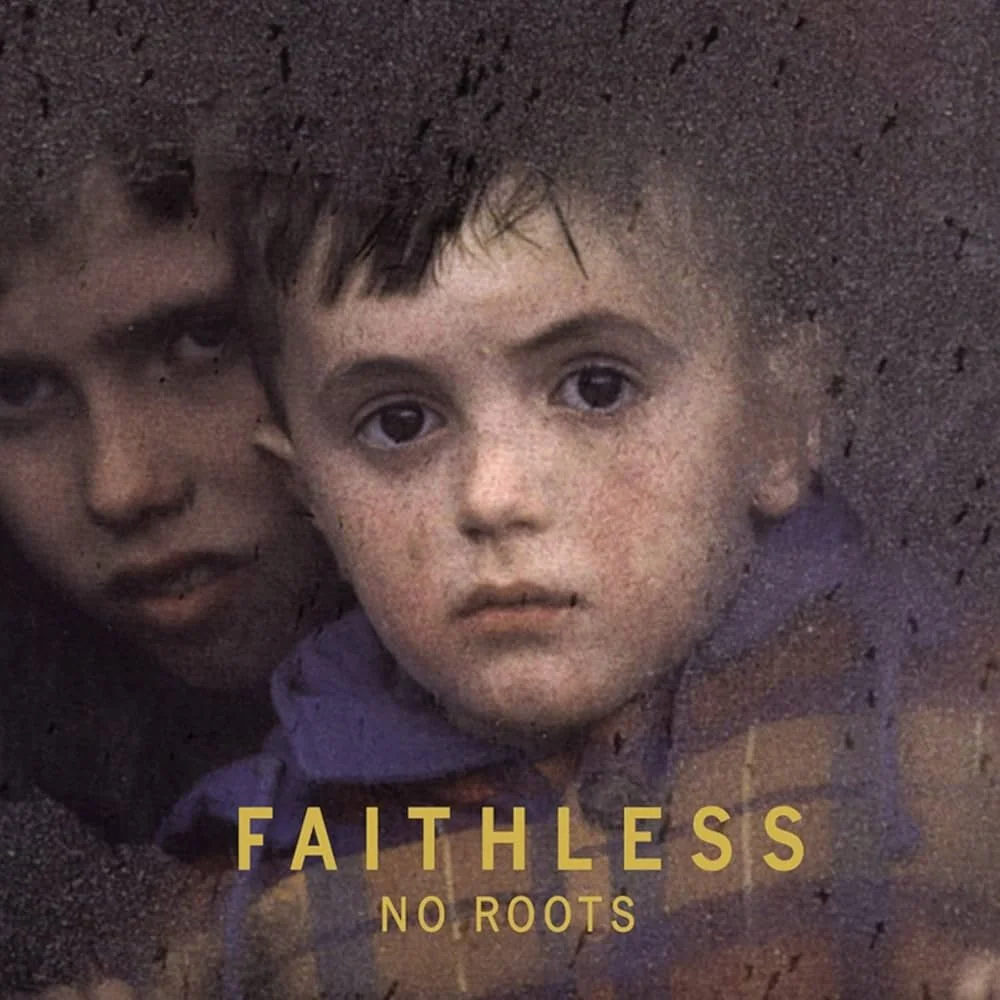
Faithless – No Roots
No Roots is exactly the sort of album that should be experienced from start to finish, in the way nature (or Maxi Jazz) intended.
It’s not only poetic, dynamic, and varied but also politically charged, featuring vocals from Dido, Nina Simone, and LSK. (Dido’s older brother, Rollo, was a founding member of Faithless.)
While playing the CD on repeat as I drove between Brisbane and my hometown, I’d often play ‘Miss U Less, See U More’ at least half a dozen times in the middle. I’ve always been a pathological song-repeater (could be a touch of neurospice), but that track was uniquely addictive to my mid-20s brain.
The album also features some of the most unexpectedly poignant lyrics you might find in a clutch of dance tracks. I’m not sure where I’d put them, but perhaps I’ll have these words tattooed onto my body someday:
Shame your mind
Don't shine like your possessions do
RIP Maxi Jazz.
Sarah McLachlan – Surfacing
Last but not least, it’s a toss-up between Sarah McLachlan’s Fumbling Towards Ecstasy and this one, Surfacing.
Fumbling Towards Ecstasy is a quieter album; Surfacing is famous for McLachlan’s haunting song ‘Angel', which she wrote in remembrance of artists and celebrities lost to drug overdose.
Many people are familiar with the opening track, ‘Building a Mystery’, which was Canada’s most successful single of 1997 and the winning song that year for the Grammy Awards’ Best Female Pop Vocal Performance.
In my opinion, though, there are other tracks on Surfacing just as worthy and memorable as both ‘Angel’ and ‘Building a Mystery’ – including ‘Witness’ (hazy, smouldering, distorted) and ‘Do What You Have to Do’ (utterly devastating).
Once more, I owe my enduring relationship with this album to my music-loving buddy, himself a great fan.
