
five for friday

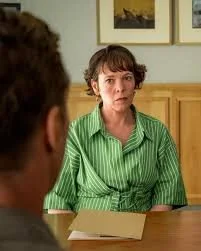
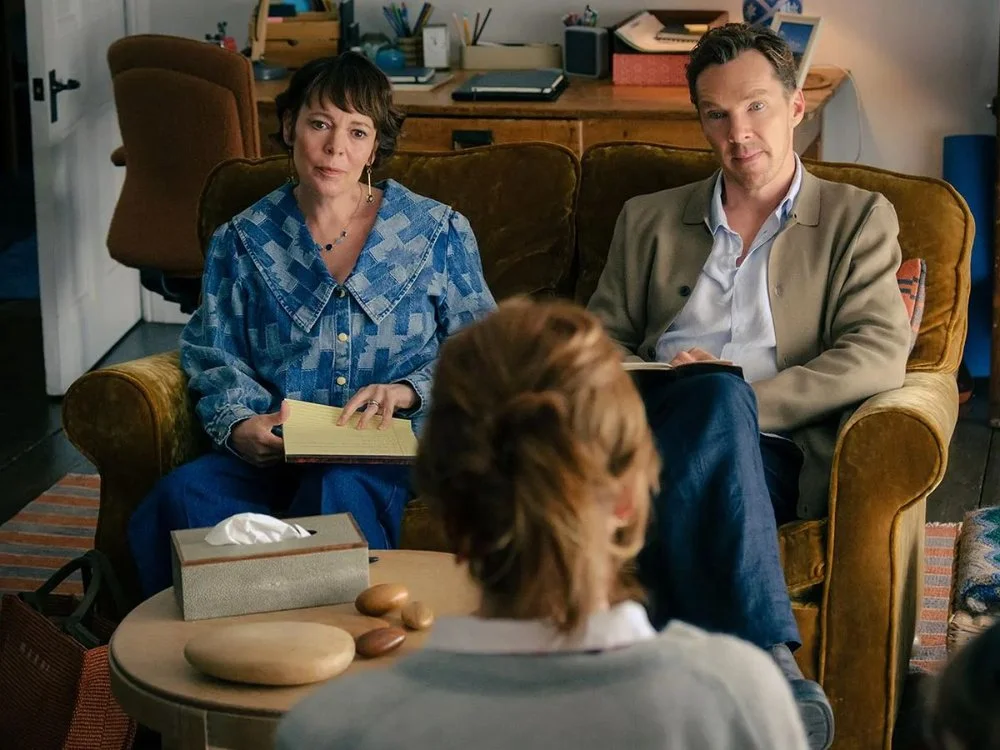
One. Funnily enough, after complaining about a dearth of decent films in 2025, I enjoyed every moment of The Roses, a contemporary adaptation of Warren Adler’s 1981 novel, The War of the Roses. Rather than being a remake of the other film adaptation from 1989, Jay Roach’s version reimagines the classic tale of marital harmony turning into vicious rivalry, starring the British equivalent of thespian gelignite: Benedict Cumberbatch as a successful-then-struggling architect and Olivia Colman as his wife (a critically acclaimed – and increasingly wealthy – chef).
Relocating the couple from England to California in the initial scenes of the film is an inspired move that dials up the couple’s ‘us against the world’ camaraderie, only for it to unravel in devastating increments. The script is even-handed in its allocation of blame: both Ivy and Theo behave badly; both are wounded. It’s funny. It’s vivid. It’s tragic. And, on an unrelated note, the styling is perfect.

Two. I’ve had an Instax Mini for years, which is sadly reaching the end of its natural life. So, I was ecstatic to be gifted a Lomo camera for Christmas, which can use both square and rectangular film. I’m still growing accustomed to its array of settings, but so far, so good. (What does one do with all the printed photos, though…?)
Three. These cheaty Brazilian cheese breads remind me of a meme I once saw making fun of things white people say: ‘These chips are dangerous.’ Indeed, cheese breads are dangerous: if I make them at home without a specific occasion in mind, I can easily eat a whole tray myself.
If you’ve never tried pão de queijo, what can I say? YOU SHOULD. (Made with tapioca flour, they’re also safe for coeliacs.) I brought them to a Christmas-adjacent family lunch in a desperate bid to impress some South American guests, and they were polite enough to praise my cooking.
Four. I finished reading RF Kuang’s Katabasis just after I went back to work – what felt like a real accomplishment given the book’s doorstopper dimensions and its classification as some kind of fantasy novel.
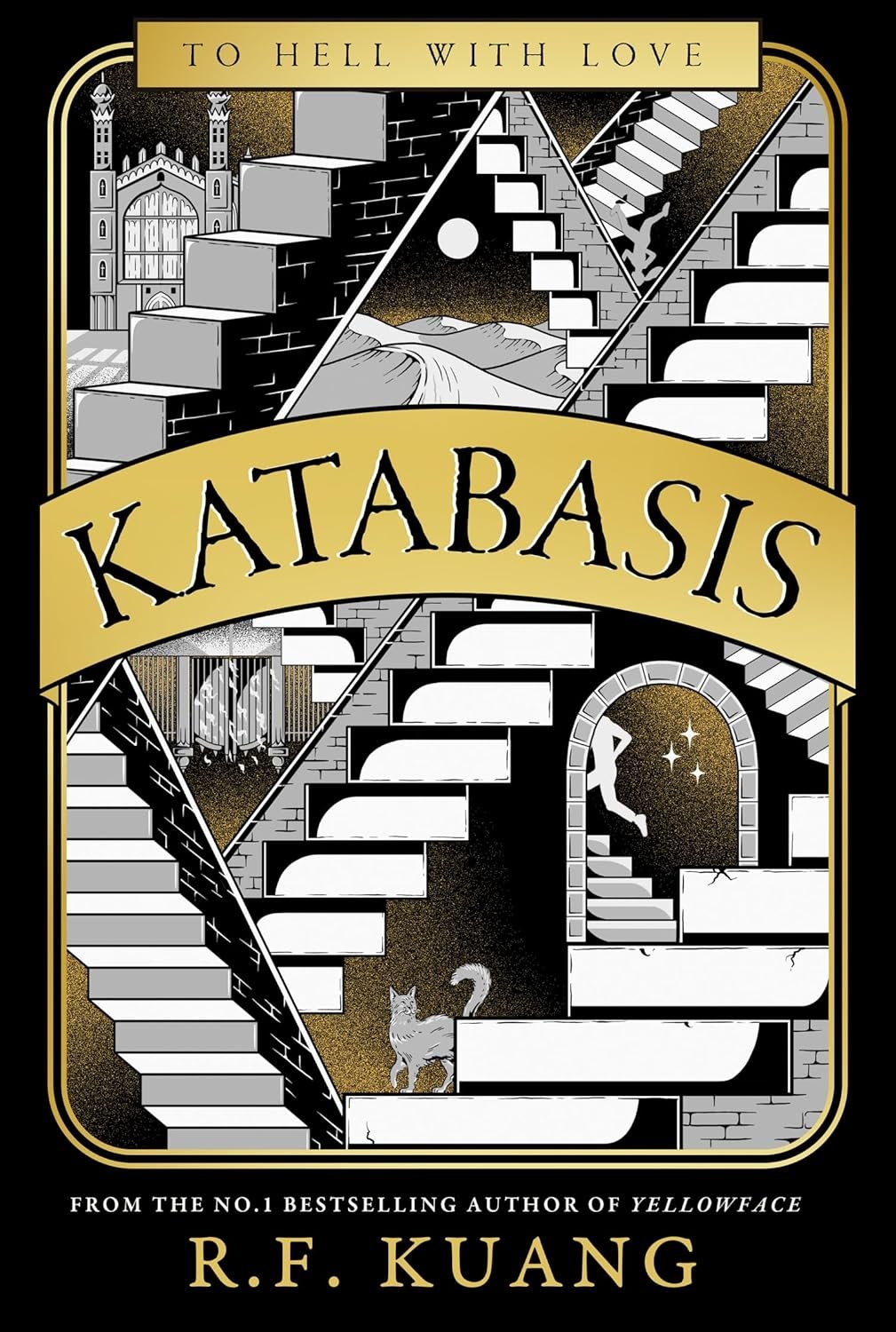
I’d picked it up on a whim before Christmas, having spotted a hardcover copy in Dymocks for $45 then a paperback in Target for only $12, a purchase that left me feeling rueful and a little dirty.
Feelings of shame aside, I decided to make it my first read of the year as something fast-paced and frictionless yet also clever, and on those points the novel succeeded in spades. On others, though, I couldn’t help but wonder if the book’s alarmingly short gestation undermined its potential. (Kuang published Yellowface in mid-2023; Katabasis – at 560 pages – came out in August 2025.)
As the name suggests, Katabasis is set in the underworld, a version of Hell into which two Cambridge graduate students descend in search of their recently exploded supervisor, Professor Grimes. Such is the urgency of retrieving Grimes for the purpose of guaranteeing tenured jobs post graduation, Alice Law and Peter Murdoch, scholars of magick, together cast a spell that allows them brief access to the afterlife, even as it halves their estimated lifespans.
At least, that’s the original premise.
Alice and Peter are stellar students: naturally gifted, relentlessly hardworking, and unapologetically competitive. From the very first pages, it becomes obvious that their relationship with each other, and to Grimes, is veined by pulsing resentments. As they trudge their way through successive courts of Hell – Pride, Desire, Greed, Wrath, and so on – the narrative reveals their true motives for bargaining with the underworld, both parodying the contemporary academy and delivering an enemies-to-lovers arc that’s enjoyable if not entirely predictable.
The gripes I have are not with the way the novel adheres to commercial genre conventions. That would be unfair: I chose to read a fantasy novel with elements of romance! The plot twists are unsurprising but not in an unpleasant way. Instead, I was disappointed by the book’s carelessness, another in a series of memoirs and novels I’ve recently read that seem only haphazardly developed, rushed to print without the kind of structural or copy editing that might help the artefact truly shine. Katabasis is unnecessarily long, overstuffed with gratuitous happenings and details. And despite its more triumphant attempts at critiquing the tentacular evils of academia (poor funding for humanities disciplines, exploitative power relations between staff and students, precarious work opportunities, toxic imperatives to ‘publish or perish’, the ubiquity of sexual violence), the potency of these themes becomes diluted as the characters walk and walk and ruminate and ruminate, bypassing courts altogether as if Kuang simply ran out of ideas for them. (There’s a lot of sand. So much sand.) In the end, I was hoping for something more careful, precise, and scathing – something stripped a little cleaner, something that struck a little deeper.
Five. Writers will find nothing new or revelatory in this how-to from Literary Hub about developing a better writing practice, but the five steps are worth repeating as a sensible reminder that good work takes time and effort. I feel as though I shouldn’t admit this publicly, but it came out of my mouth over coffee last week, and I’ve realised it’s true: I’d rather publish one book I can be truly proud of than try to conform to the current expectation that serious writers will churn out book after book, often with only a year or two in between.
At the rate I’m going, I’ll die before finishing my current manuscript. But I actually think I’ll write more if I remove the pressure to complete it this year?
We’ll see.
